Tag: Accounting

Accounting, Accounting Florida, Miami Accounting, International Accounting, Bookkeeping, Accounting Services, Business Accounting, Professional Accounting, Taxes, Tax Filing, Tax Questions, Federal Tax Forms, Tax Information, Tax Help, Income Tax, Business Taxes, Real Estate Tax, IRS Assistance, Tax Compliance, Small Business Tax, International Taxation, Florida Tax Preparation, Contabilidad, Contabilidad Florida, Miami Contabilidad, Empresas de Contabilidad, Tributación Internacional, Impuestos, Declaración de Impuestos, Formularios de Impuestos, Información de Impuestos, Impuesto sobre Bienes Inmuebles, Contabilidade, Tributação Internacional, Declaração de Impostos, Impostos, Imóveis, Contabilidade Internacional, Real Estate Accounting, Real Estate Tax Services, Small Business Accounting, Corporate Tax Filing, Tax Planning for Businesses, International Business Tax, Personal Tax Filing, Self-Employed Tax Services, Miami Tax Services, Florida Tax Preparation, Miami Bookkeeping, Florida Contabilidad, Contadores en Miami, Tributación en Miami, Miami Business Tax Services, CPA services for small businesses, business accounting Miami,

LA INFORMACIÓN FINANCIERA QUE PUEDE TRANSFORMAR SU NEGOCIO

¿Está Tomando Decisiones Basándose en Datos o en Suposiciones? Todos los días, los dueños de negocios enfrentan decisiones importantes. ¿Es el momento adecuado para contratar un nuevo empleado? ¿Puede el negocio asumir el costo de un nuevo equipo? ¿Es necesario aumentar precios? ¿Existe suficiente efectivo para expandir operaciones? Muchos empresarios responden estas preguntas utilizando su […]

Read More


¿LA CONTABILIDAD ESTÁ FRENANDO EL CRECIMIENTO DE SU EMPRESA? CINCO SEÑALES QUE NO DEBE IGNORAR

¿La Contabilidad le Está Ayudando a Crecer o le Está Robando Tiempo? La mayoría de los empresarios no abrieron sus negocios porque les apasionara registrar transacciones o conciliar cuentas bancarias. Comenzaron con una idea, un sueño y el deseo de construir algo importante. Sin embargo, con el paso del tiempo, muchos propietarios terminan dedicando noches […]

Read More
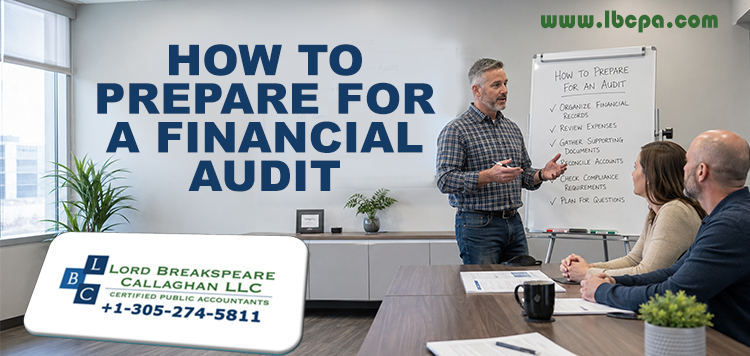
AUDIT READY: HOW PROPER FINANCIAL PREPARATION CAN PROTECT YOUR BUSINESS Does the Thought of an Audit Make You Nervous? For many business owners, the word "audit" immediately creates anxiety. Concerns about missing documents, accounting errors, or unexpected questions can make the process seem overwhelming. Yet the reality is that audits are a normal part of doing business, and proper preparation can make the experience significantly less stressful. The biggest mistake many companies make is waiting until an audit is announced before getting organized. By then, valuable time is lost searching for records, reconciling accounts, and correcting mistakes that could have been addressed much earlier. The truth is simple: Businesses that maintain organized financial records throughout the year are usually in a much stronger position when an audit occurs. What Is a Financial Audit? A financial audit is an examination of a company's financial records to determine whether the information presented is accurate, complete, and supported by documentation. Audits may be requested by: • Banks and lenders. • Investors. • Government agencies. • Insurance companies. • Regulatory organizations. • Buyers interested in acquiring a business. An audit does not necessarily mean something is wrong. In many cases, audits are simply designed to provide confidence and verify the integrity of financial information. Why Preparation Matters Proper preparation can help businesses: • Reduce stress. • Avoid unnecessary delays. • Improve accuracy. • Strengthen credibility. • Identify issues before they become problems. A business that is prepared demonstrates professionalism and financial discipline. Step 1: Maintain Accurate Financial Records Strong financial records are the foundation of audit readiness. Businesses should maintain: • Bank statements. • Credit card statements. • Payroll records. • Customer invoices. • Vendor invoices. • Expense receipts. • Tax returns. • Loan agreements. • Contracts and leases. Missing documentation is one of the most common reasons audits become complicated. Step 2: Reconcile Accounts Regularly Bank and credit card reconciliations help ensure that financial statements accurately reflect business activity. Regular reconciliations help identify: • Duplicate entries. • Missing transactions. • Recording errors. • Unusual activity. Waiting until the last minute to reconcile accounts often creates unnecessary challenges. Step 3: Review Financial Statements Financial statements should be reviewed periodically to ensure consistency and accuracy. Key reports include: Profit and Loss Statement Shows: • Revenue. • Expenses. • Net profit. Balance Sheet Shows: • Assets. • Liabilities. • Equity. Statement of Cash Flows Shows: • Sources of cash. • Uses of cash. Reviewing these reports regularly helps identify discrepancies before an audit begins. Step 4: Organize Supporting Documentation Every transaction should be supported by proper records. Examples include: • Receipts. • Invoices. • Purchase orders. • Payroll reports. • Contracts. • Bank confirmations. Clear documentation provides evidence and improves confidence in the accuracy of financial records. Step 5: Address Problems Early Audits often uncover issues that have existed for months or even years. Common examples include: • Unreconciled accounts. • Incorrect expense classifications. • Missing documentation. • Payroll discrepancies. Identifying and correcting these issues early helps prevent larger problems later. Step 6: Establish Strong Internal Controls Internal controls help reduce errors and improve accountability. Examples include: • Separating financial duties. • Reviewing transactions regularly. • Restricting access to sensitive information. • Monitoring expenses and approvals. Strong controls help create more reliable financial information. Audit Preparation Is a Year-Round Process Many business owners view audits as isolated events. In reality, businesses that maintain organized books and financial records throughout the year are generally much better prepared when questions arise. Good accounting practices not only simplify audits, they also improve: • Cash flow management. • Decision-making. • Tax compliance. • Profitability. Preparation creates confidence. From Stress to Confidence An audit does not have to become a crisis. When financial records are organized and accurate, businesses are better equipped to: • Respond quickly. • Provide documentation. • Demonstrate professionalism. • Maintain credibility. The goal is not simply to survive an audit—it is to operate with financial clarity all year long. Take Control of Your Business Finances Today! Stop stressing over deadlines, penalties, and tax rules. Let the Essential Business Accounting and Tax Program from Lord Breakspeare Callaghan LLC help provide the bookkeeping, reconciliations, financial reporting, and tax compliance support your business needs to remain audit ready and financially organized. Call us today at 305-274-5811 or visit www.lbcpa.com to start a conversation about strengthening your financial foundation. Source: Lord Breakspeare Callaghan LLC

AUDIT READY: HOW PROPER FINANCIAL PREPARATION CAN PROTECT YOUR BUSINESS

AUDIT READY: HOW PROPER FINANCIAL PREPARATION CAN PROTECT YOUR BUSINESS Does the Thought of an Audit Make You Nervous? For many business owners, the word “audit” immediately creates anxiety. Concerns about missing documents, accounting errors, or unexpected questions can make the process seem overwhelming. Yet the reality is that audits are a normal part of […]

Read More