Cesar Rodriguez

Are You Running Your Business Without a Financial Roadmap? Imagine getting into your car for a cross-country trip without a map, GPS, or destination. You might eventually arrive somewhere, but chances are you'll waste time, money, and energy getting there. Unfortunately, many small business owners operate their businesses the same way. They work hard, generate sales, pay bills, and hope everything works out. Yet month after month they wonder: • Why is there never enough cash available? • Why are profits lower than expected? • Why does tax season always create stress? • Why does growth seem more difficult than it should be? The answer often comes down to one critical issue: They do not have a realistic business budget. A budget is one of the most powerful financial tools available to a business owner. It provides direction, creates accountability, and helps identify potential problems before they become financial emergencies. Whether your company is brand new or has been operating for years, learning how to create and maintain a budget can dramatically improve your financial confidence and decision-making. Why Budgeting Is Essential for Business Success Many people mistakenly believe that budgets are designed to restrict spending. In reality, a budget does exactly the opposite. A well-designed budget gives you the freedom to make smarter financial decisions because you understand exactly where your money is going. Businesses that operate without a budget often experience: • Unexpected cash shortages • Difficulty paying vendors on time • Excessive debt • Missed growth opportunities • Tax surprises • Increased financial stress A budget helps eliminate uncertainty and replace it with clarity. Instead of guessing, you begin making decisions based on facts. Step 1: Know Where Your Business Stands Today Before creating a budget, you need a clear picture of your current financial position. Review: • Bank statements • Credit card statements • Profit and loss reports • Payroll records • Previous tax returns • Monthly operating expenses This information provides valuable insight into how your business has performed historically. Pay close attention to trends. Ask yourself: • Which months generate the highest revenue? • Which months are slower? • What expenses continue to increase? • Are there recurring costs that could be reduced? The better you understand your financial history, the more accurate your budget will be. Step 2: Create Realistic Revenue Projections One of the most common budgeting mistakes is overestimating future income. Optimism is valuable in business—but unrealistic projections can create serious financial problems. When estimating future revenue, consider: • Historical sales performance • Market conditions • Industry trends • Seasonal fluctuations • New opportunities or challenges A conservative approach often produces the best results. If revenue exceeds expectations, that's a positive surprise. If revenue falls short of overly optimistic projections, financial stress follows. Step 3: Identify Fixed and Variable Expenses Every business has expenses that must be paid regardless of sales volume. These fixed expenses may include: • Rent • Insurance • Salaries • Software subscriptions • Equipment leases • Loan payments You must also estimate variable expenses such as: • Marketing • Shipping • Inventory • Utilities • Travel • Contract labor Understanding both categories is critical because profitability depends not only on revenue but also on controlling expenses. Many businesses lose money not because they lack sales—but because costs are not properly monitored. Step 4: Build Taxes Into Your Budget One of the most costly mistakes small business owners make is treating taxes as an afterthought. Every year, many businesses face cash flow challenges because they failed to set aside funds for: • Federal income taxes • State taxes • Payroll taxes • Sales taxes • Estimated quarterly tax payments Tax obligations should be planned for throughout the year. When taxes are included in your monthly budget, there are fewer surprises and significantly less stress. Step 5: Prepare for the Unexpected Unexpected expenses are part of doing business. Equipment breaks. Customers delay payments. Economic conditions change. Emergencies happen. Businesses without financial reserves often find themselves relying on credit cards, loans, or personal funds during difficult times. A budget should include an emergency reserve. Even small monthly contributions can create a valuable financial cushion over time. This reserve can mean the difference between a temporary setback and a major financial crisis. Step 6: Monitor Your Budget Every Month Creating a budget is only the beginning. The real value comes from reviewing it regularly. Each month compare: • Budgeted revenue versus actual revenue • Budgeted expenses versus actual expenses • Cash flow performance • Profitability trends This process helps identify problems early. Small adjustments made consistently are far easier than major corrections later. Successful businesses treat budgeting as an ongoing process—not a one-time event. Warning Signs That Your Budget Needs Attention If you experience any of the following, your budget may need immediate review: • Frequent cash shortages • Difficulty covering payroll • Increasing credit card balances • Late vendor payments • Unexpected tax bills • Declining profitability These are often symptoms of deeper financial issues that can be addressed through better planning and stronger financial management. Budgeting Creates Clarity, Confidence, and Control Business owners who budget effectively tend to make better decisions. They know: • How much they can spend • When they can invest • How much cash they need • What risks are approaching Most importantly, they operate with greater confidence because they understand their numbers. A budget is not simply a financial document. It is a management tool. It transforms uncertainty into visibility and helps create a stronger foundation for long-term growth. For many businesses, budgeting is the first step toward greater profitability, improved cash flow, and reduced financial stress. Take Control of Your Business Finances Today! Stop stressing over deadlines, penalties, and tax rules. Let the Essential Business Accounting and Tax Program from Lord Breakspeare Callaghan LLC handle the accounting, bookkeeping, reconciliations, financial reporting, and tax compliance tasks that help support a realistic and effective budget—so you can focus on growing your business. Call us today at 305-274-5811 or visit www.lbcpa.com to start a conversation about strengthening your business finances and building a more profitable future. Source: Lord Breakspeare Callaghan LLC

HOW TO SET UP A BUDGET FOR YOUR SMALL BUSINESS

Are You Running Your Business Without a Financial Roadmap? Imagine getting into your car for a cross-country trip without a map, GPS, or destination. You might eventually arrive somewhere, but chances are you’ll waste time, money, and energy getting there. Unfortunately, many small business owners operate their businesses the same way. They work hard, generate […]

Read More


Accounting, Accounting Florida, Miami Accounting, International Accounting, Bookkeeping, Accounting Services, Business Accounting, Professional Accounting, Taxes, Tax Filing, Tax Questions, Federal Tax Forms, Tax Information, Tax Help, Income Tax, Business Taxes, Real Estate Tax, IRS Assistance, Tax Compliance, Small Business Tax, International Taxation, Florida Tax Preparation, Contabilidad, Contabilidad Florida, Miami Contabilidad, Empresas de Contabilidad, Tributación Internacional, Impuestos, Declaración de Impuestos, Formularios de Impuestos, Información de Impuestos, Impuesto sobre Bienes Inmuebles, Contabilidade, Tributação Internacional, Declaração de Impostos, Impostos, Imóveis, Contabilidade Internacional, Real Estate Accounting, Real Estate Tax Services, Small Business Accounting, Corporate Tax Filing, Tax Planning for Businesses, International Business Tax, Personal Tax Filing, Self-Employed Tax Services, Miami Tax Services, Florida Tax Preparation, Miami Bookkeeping, Florida Contabilidad, Contadores en Miami, Tributación en Miami, Miami Business Tax Services, CPA services for small businesses, business accounting Miami,

LA INFORMACIÓN FINANCIERA QUE PUEDE TRANSFORMAR SU NEGOCIO

¿Está Tomando Decisiones Basándose en Datos o en Suposiciones? Todos los días, los dueños de negocios enfrentan decisiones importantes. ¿Es el momento adecuado para contratar un nuevo empleado? ¿Puede el negocio asumir el costo de un nuevo equipo? ¿Es necesario aumentar precios? ¿Existe suficiente efectivo para expandir operaciones? Muchos empresarios responden estas preguntas utilizando su […]

Read More

¿LA CONTABILIDAD ESTÁ FRENANDO EL CRECIMIENTO DE SU EMPRESA? CINCO SEÑALES QUE NO DEBE IGNORAR

¿La Contabilidad le Está Ayudando a Crecer o le Está Robando Tiempo? La mayoría de los empresarios no abrieron sus negocios porque les apasionara registrar transacciones o conciliar cuentas bancarias. Comenzaron con una idea, un sueño y el deseo de construir algo importante. Sin embargo, con el paso del tiempo, muchos propietarios terminan dedicando noches […]

Read More
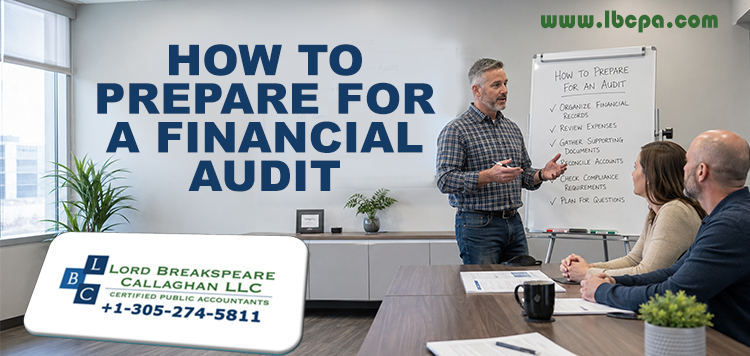
AUDIT READY: HOW PROPER FINANCIAL PREPARATION CAN PROTECT YOUR BUSINESS Does the Thought of an Audit Make You Nervous? For many business owners, the word "audit" immediately creates anxiety. Concerns about missing documents, accounting errors, or unexpected questions can make the process seem overwhelming. Yet the reality is that audits are a normal part of doing business, and proper preparation can make the experience significantly less stressful. The biggest mistake many companies make is waiting until an audit is announced before getting organized. By then, valuable time is lost searching for records, reconciling accounts, and correcting mistakes that could have been addressed much earlier. The truth is simple: Businesses that maintain organized financial records throughout the year are usually in a much stronger position when an audit occurs. What Is a Financial Audit? A financial audit is an examination of a company's financial records to determine whether the information presented is accurate, complete, and supported by documentation. Audits may be requested by: • Banks and lenders. • Investors. • Government agencies. • Insurance companies. • Regulatory organizations. • Buyers interested in acquiring a business. An audit does not necessarily mean something is wrong. In many cases, audits are simply designed to provide confidence and verify the integrity of financial information. Why Preparation Matters Proper preparation can help businesses: • Reduce stress. • Avoid unnecessary delays. • Improve accuracy. • Strengthen credibility. • Identify issues before they become problems. A business that is prepared demonstrates professionalism and financial discipline. Step 1: Maintain Accurate Financial Records Strong financial records are the foundation of audit readiness. Businesses should maintain: • Bank statements. • Credit card statements. • Payroll records. • Customer invoices. • Vendor invoices. • Expense receipts. • Tax returns. • Loan agreements. • Contracts and leases. Missing documentation is one of the most common reasons audits become complicated. Step 2: Reconcile Accounts Regularly Bank and credit card reconciliations help ensure that financial statements accurately reflect business activity. Regular reconciliations help identify: • Duplicate entries. • Missing transactions. • Recording errors. • Unusual activity. Waiting until the last minute to reconcile accounts often creates unnecessary challenges. Step 3: Review Financial Statements Financial statements should be reviewed periodically to ensure consistency and accuracy. Key reports include: Profit and Loss Statement Shows: • Revenue. • Expenses. • Net profit. Balance Sheet Shows: • Assets. • Liabilities. • Equity. Statement of Cash Flows Shows: • Sources of cash. • Uses of cash. Reviewing these reports regularly helps identify discrepancies before an audit begins. Step 4: Organize Supporting Documentation Every transaction should be supported by proper records. Examples include: • Receipts. • Invoices. • Purchase orders. • Payroll reports. • Contracts. • Bank confirmations. Clear documentation provides evidence and improves confidence in the accuracy of financial records. Step 5: Address Problems Early Audits often uncover issues that have existed for months or even years. Common examples include: • Unreconciled accounts. • Incorrect expense classifications. • Missing documentation. • Payroll discrepancies. Identifying and correcting these issues early helps prevent larger problems later. Step 6: Establish Strong Internal Controls Internal controls help reduce errors and improve accountability. Examples include: • Separating financial duties. • Reviewing transactions regularly. • Restricting access to sensitive information. • Monitoring expenses and approvals. Strong controls help create more reliable financial information. Audit Preparation Is a Year-Round Process Many business owners view audits as isolated events. In reality, businesses that maintain organized books and financial records throughout the year are generally much better prepared when questions arise. Good accounting practices not only simplify audits, they also improve: • Cash flow management. • Decision-making. • Tax compliance. • Profitability. Preparation creates confidence. From Stress to Confidence An audit does not have to become a crisis. When financial records are organized and accurate, businesses are better equipped to: • Respond quickly. • Provide documentation. • Demonstrate professionalism. • Maintain credibility. The goal is not simply to survive an audit—it is to operate with financial clarity all year long. Take Control of Your Business Finances Today! Stop stressing over deadlines, penalties, and tax rules. Let the Essential Business Accounting and Tax Program from Lord Breakspeare Callaghan LLC help provide the bookkeeping, reconciliations, financial reporting, and tax compliance support your business needs to remain audit ready and financially organized. Call us today at 305-274-5811 or visit www.lbcpa.com to start a conversation about strengthening your financial foundation. Source: Lord Breakspeare Callaghan LLC

AUDIT READY: HOW PROPER FINANCIAL PREPARATION CAN PROTECT YOUR BUSINESS

AUDIT READY: HOW PROPER FINANCIAL PREPARATION CAN PROTECT YOUR BUSINESS Does the Thought of an Audit Make You Nervous? For many business owners, the word “audit” immediately creates anxiety. Concerns about missing documents, accounting errors, or unexpected questions can make the process seem overwhelming. Yet the reality is that audits are a normal part of […]

Read More
Lord Breakspeare Callaghan LLC +1-305-274-5811

DIRTY DOZEN: WATCH OUT FOR SCAMMERS USING EMAIL AND TEXT MESSAGES TO TRY TRICKING PEOPLE DURING TAX SEASON

With the filing deadline quickly approaching, the Internal Revenue Service today urged everyone to remain vigilant against email and text scams aimed at tricking taxpayers about refunds or tax issues. In day two of the annual Dirty Dozen tax scams campaign, the IRS again includes a warning about phishing and smishing schemes where cybercriminals try […]

Read More